Amine Catalyst

What is Amine Catalyst for Polyurethane

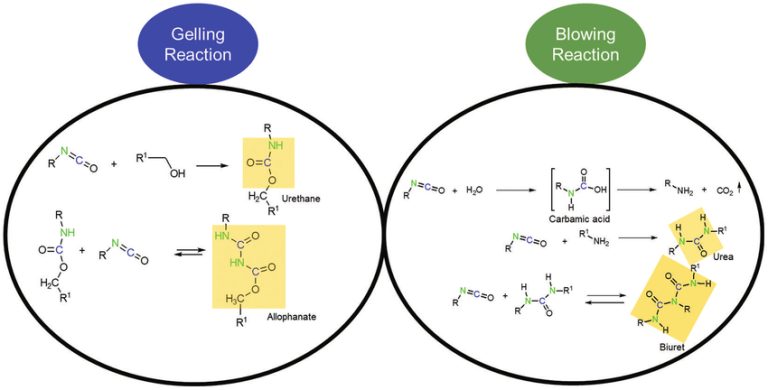
Amine catalysts work by accelerating the reaction between the isocyanate group (NCO) and active hydrogen compounds. In polyurethane foam formation, two competing reactions occur: the isocyanate-polyol reaction (gelation) and the isocyanate-water reaction (blowing). Amine catalysts primarily accelerate the blowing reaction, generating CO2 gas that creates the foam cells.

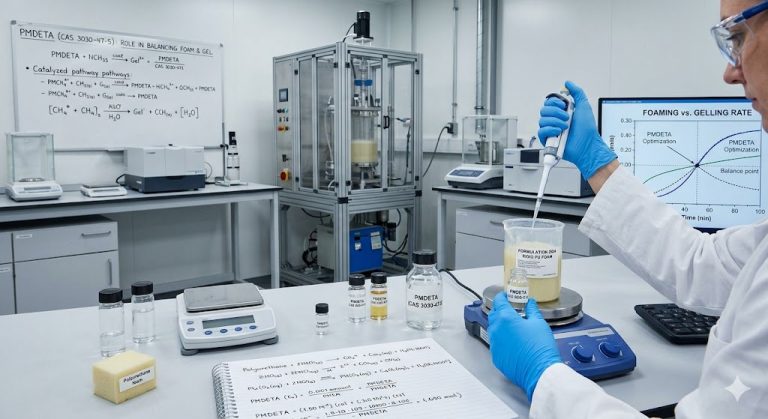
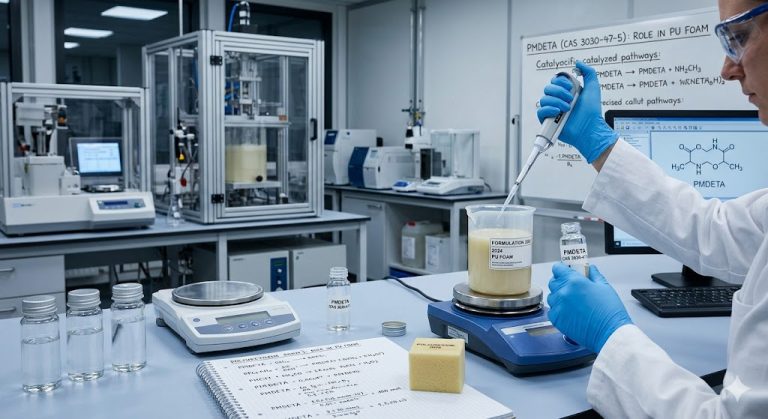
The key characteristic of amine catalysts is their ability to control the balance between gas generation and polymer formation. Strong blowing catalysts like DMEA produce faster gas evolution, resulting in lower density foam. Balanced catalysts like PMDETA allow both reactions to proceed at similar rates, giving better control over foam rise and cell structure.

Core Logic of Spray Foam Curing

This article dissects the molecular logic of SPF curing through precision amine catalysis. We analyze the critical balance between blowing

Composition of Amine Catalysts

Amine catalysts are organic bases containing nitrogen atoms with lone electron pairs. These lone pairs attack the electrophilic carbon in the isocyanate group, lowering the activation energy of the reaction. The basicity of the amine determines its catalytic strength – stronger bases catalyze reactions more rapidly.

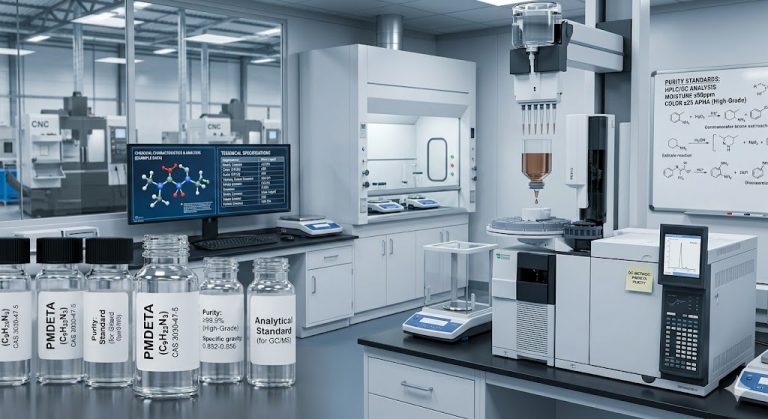
Breaking down Ming Xu amine catalysts gives you tertiary amines with specific molecular structures. PMDETA (Pentamethyldiethylenetriamine) contains three amine groups, providing multiple catalytic sites. This multi-functional structure allows PMDETA to catalyze both urethane formation and urea formation simultaneously.

Applications of PU Amine Catalysts

  • Flexible Foams
    Used in furniture, mattresses, and car seats.
    Catalysts ensure the foam has the desired softness and resilience.
  • Rigid Foams
    Commonly found in building insulation, refrigerators, and freezers.
    Catalysts improve foam density and structural integrity, thereby enhancing insulation performance.
  • Coatings, Adhesives, Sealants, and Elastomers
    Amine catalysts help improve the strength, elasticity, and adhesive properties of these polyurethane-based products.
  • Shoe Soles
    Catalysts play a crucial role in optimizing the hardness, flexibility, and durability required for these applications.

Applications of PU Amine Catalysts

  • Flexible Foams
    Used in furniture, mattresses, and car seats.
    Catalysts ensure the foam has the desired softness and resilience.
  • Rigid Foams
    Commonly found in building insulation, refrigerators, and freezers.
    Catalysts improve foam density and structural integrity, thereby enhancing insulation performance.
  • Coatings, Adhesives, Sealants, and Elastomers
    Amine catalysts help improve the strength, elasticity, and adhesive properties of these polyurethane-based products.
  • Shoe Soles
    Catalysts play a crucial role in optimizing the hardness, flexibility, and durability required for these applications.
Send Your Inquiry Today

Let's have a chat