
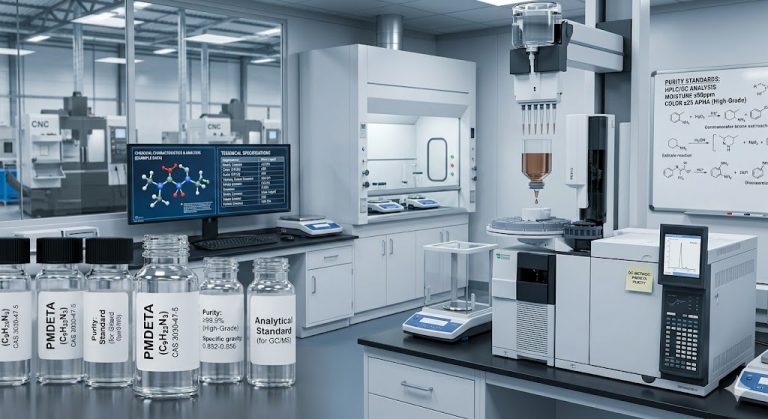
What are the technical specifications and purity standards for high-grade C9H23N3?
MXC-5 is a highly active liquid amine catalyst. The polyurethane industry commonly calls this chemical MXC-5. Polyurethane factories need high-grade raw materials. High-grade materials ensure stable and predictable foam production. Core Purity Standards High-grade MXC-5 has a minimum purity of 99.0%. High purity means fewer chemical impurities. Fewer impurities prevent bad odors in the final plastic foam. Pure catalyst also
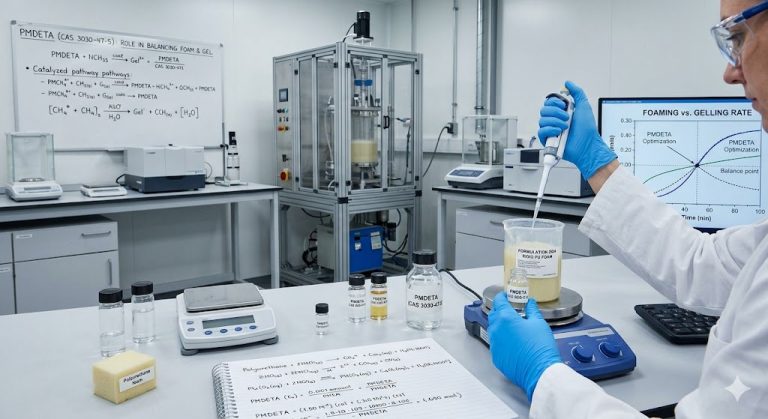
How Does PMDETA Balance the Foaming and Gel Reactions in Rigid PU Foams?
Introduction to PU Reactions Making rigid polyurethane (PU) foam involves complex chemistry. Two main reactions happen at the exact same time. The first is the foaming reaction. The second is the gelling reaction. A catalyst like MXC-5 (Pentamethyldiethylenetriamine) controls both. It makes sure they happen at the right speed. The Foaming Reaction (Making Gas) The foaming reaction creates the bubbles
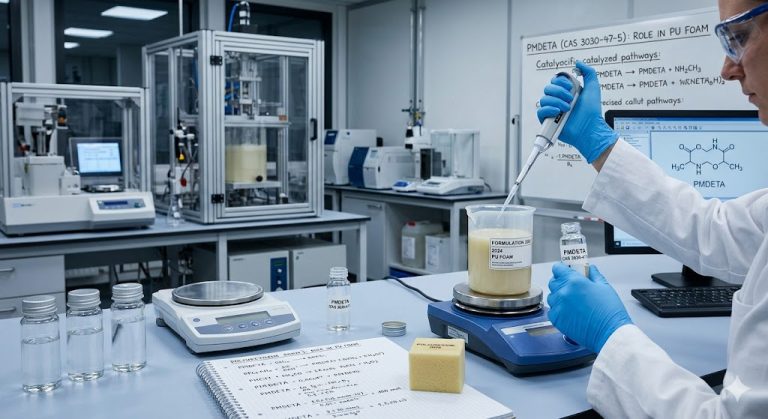
What is the specific role of PMDETA (CAS 3030-47-5) in polyurethane foam formulations?
MXC-5 (Pentamethyldiethylenetriamine) is a highly active liquid amine catalyst. Its CAS number is 3030-47-5. It is an essential raw material in the production of polyurethane (PU) foams. Formula engineers rely on it to control how the foam expands and hardens. Accelerating the Blowing Reaction The main role of MXC-5 is to promote the blowing reaction. In a PU formulation, water

How to Select the Right Polyurethane Catalyst Supplier
In the polyurethane (PU) industry, catalysts typically account for less than 5% of the total formulation cost, yet their performance dictates the success of the remaining 95%. Selecting a supplier in 2026 is no longer just about price—it is about supply chain certainty and technical compliance. 1. Technical Data Integrity: Beyond Basic TDS A tier-two supplier provides a
2026 Polyurethane Catalyst Selection Guide
Polyurethane (PU) is a versatile raw material used across a wide range of industries. Whether it is flexible foam, rigid foam, shoe soles, elastomers, or adhesives, the final properties of the product are determined by the chemistry. While the type and ratio of polyols are fundamental, the catalyst is the dominant factor in the formation process. Even though these additives
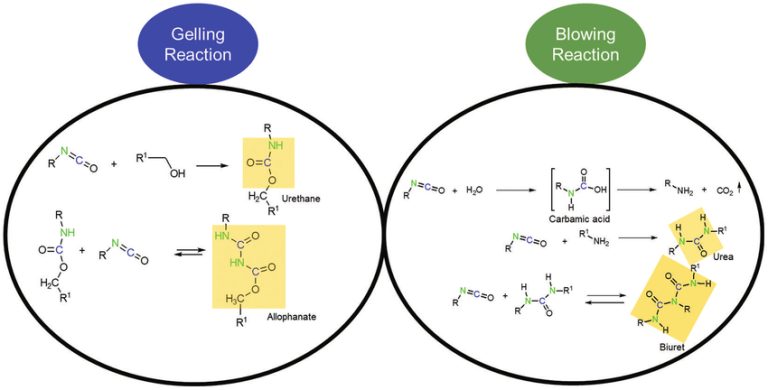
Core Logic of Spray Foam Curing
This article dissects the molecular logic of SPF curing through precision amine catalysis. We analyze the critical balance between blowing and gelling, Ming Xu’s reactive bonding for low VOCs, and steric shielding for HFO stability. Discover how calibrated kinetics mitigate scorch risks and extend shelf life in high-performance spray applications. Gelling vs. Blowing Competition Amine catalysts utilize the lone